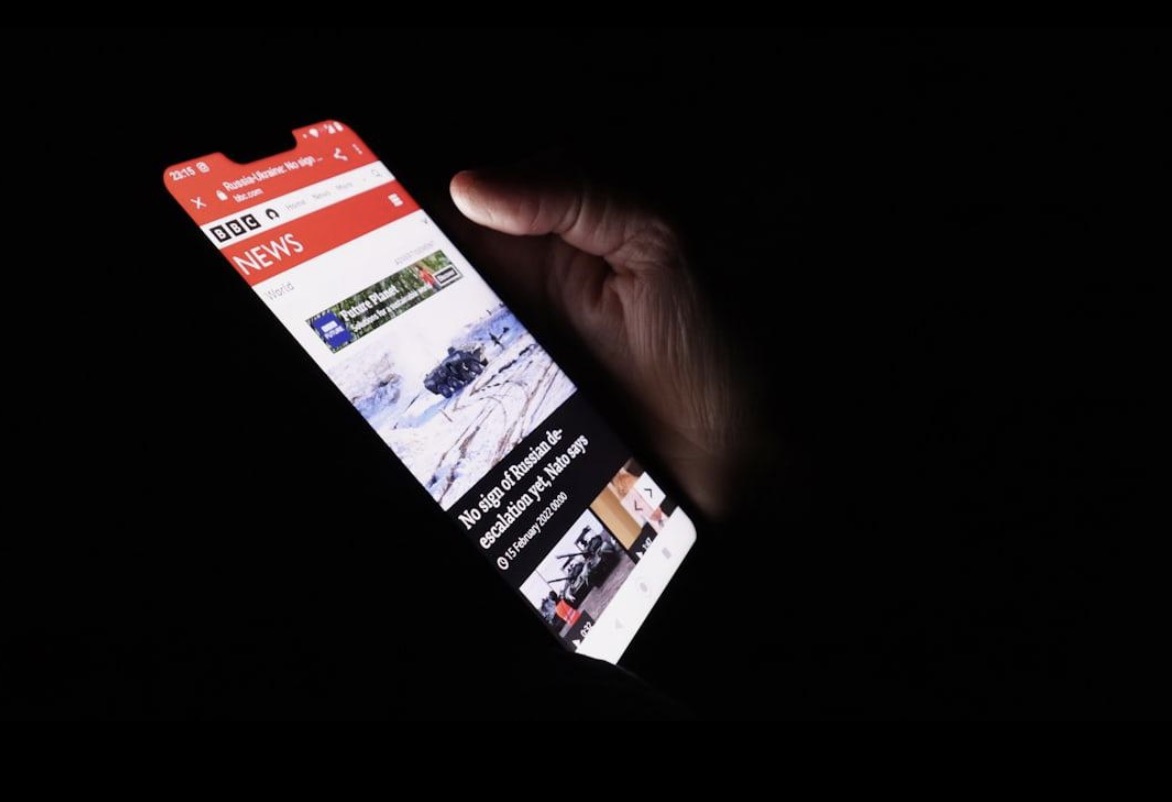
Never before have we been so well informed, so connected, so surrounded by systems meant to protect us. And yet the future has rarely seemed so worrying. What if this constant anxiety had become, for some, a business model and an instrument of power?
There is something deeply unhealthy about our times: those who claim to reassure us sometimes have every interest in keeping us afraid. Afraid of war, of crime, of illness, of losing our place in society, of what lies ahead for our children. Afraid of losing our jobs, our purchasing power, our identity or our freedoms. No sooner has one worry faded than another takes over the public space, as if our society no longer knew how to function without a permanent threat.
Fear has become a raw material. It sells, it gets clicks, it drives consumption. It makes money, brings influence and sometimes makes it possible to wield power. So who profits from our collective anxiety?
This is obviously not about denying the dangers around us. Wars are real, insecurity is not a fantasy, precariousness is a fact. But between legitimately warning of a danger and deliberately exploiting the fear it arouses, there is a line that some have every interest in crossing.
Anxiety, a particularly lucrative market
In March 2023, a study published in the scientific journal Nature Human Behaviour, covering more than 105,000 headline variations and 370 million impressions on the digital outlet Upworthy, revealed a particularly telling mechanism: in a headline of average length, each additional negative word increased the click-through rate by 2.3%. Conversely, a positive word reduced it by about 1%. When that attention is converted into advertising revenue, it becomes easier to see why doom-mongering can turn into an economic temptation.
But the phenomenon goes far beyond the media. Just look at the wellness market. We are told every day that we eat badly, sleep badly, breathe badly, age too fast. Our bodies are supposedly under constant threat, our food suspect, our environment hostile. Every new worry comes with a new commercial offer. First they make us anxious, then they sell us something to calm us down. Even our desire to live in peace has become a market.
The shrewdest merchant may no longer be the one who knows how to meet a need, but the one who knows how to create a worry lasting enough that the consumer never stops needing him.
The same mechanism can be seen in the exercise of power. History teaches us that periods of great collective anxiety are often conducive to the acceptance of exceptional measures. What would have met with legitimate resistance in normal times can suddenly become acceptable in the name of our protection. How many freedoms are we prepared to give up in exchange for a promise of security? How many decisions do we accept without question simply because they are presented to us as indispensable in the face of a threat?
Security is a necessity. It should never be an excuse to bypass democratic debate. And denouncing the exploitation of fear must never be used to dismiss citizens’ legitimate concerns. Denying problems would be just as dishonest as exploiting them.
A society under permanent strain
The Digital News Report 2026, published by the Reuters Institute for the Study of Journalism at the University of Oxford, shows that 42% of respondents say they sometimes or often avoid the news, compared with 29% in 2017. That figure should give us pause.
I have spent much of my professional life working alongside journalists, politicians, diplomats and decision-makers. One thing has often struck me: the gap between the complexity of the world as it is and the way it is sometimes told. Reality is rarely binary. It is made of contradictions, compromises, competing interests and power struggles. But that complexity sits poorly with a news cycle that demands an immediate reaction. One sometimes has to comment before even understanding, take a position before hearing from all sides, name someone responsible before all the facts are established.
I know the media world well enough to know that many journalists resist this logic and continue to do their job with rigour and courage. But they work in an economic environment that too often rewards instant emotion at the expense of reflection. The result is paradoxical: by trying to hold on to the public by alarming it, we end up exhausting it and sometimes driving it away from the news altogether. And a society in which citizens give up on staying informed because they can no longer bear the emotional burden is a democratically weakened society.
We have, in fact, become agents of our own anxiety. We check our phones when we wake up to find out what is going wrong in the world, and we check them one last time before going to sleep. We denounce sensationalism, yet we click on the most alarmist headlines. We call for nuance, yet we often share the most extreme views. It would be too convenient to present ourselves solely as the victims of a system whose mechanisms we ourselves keep running.
What future are we promising our children?
According to the Ipsos–Secours populaire barometer published in 2025, 50% of French people aged 18 to 34 feel a sense of anguish when they think about their current situation and their future. 22% speak of despair. Behind these figures lie very real economic, social and personal difficulties. But it would be irresponsible not to also question the climate in which we are raising this generation.
As a mother, this question troubles me deeply. How can we pass on a taste for the future to children whom we constantly tell that the world is heading for ruin? We talk to them about wars, disasters, economic crises and violence, and then we ask them to believe in themselves, to make plans, to take risks and to have faith in tomorrow. We ask them to be optimistic in a world we spend our time describing to them as hopeless.
I refuse to believe that our responsibility as adults is to hand down our anxieties as an inheritance. Preparing our children for the world’s difficulties does not mean convincing them that the world is doomed. They also have the right to dream, to create, to travel, to love and to imagine a better future than the one we predict for them.
There is no grand conspiracy organised around our fears. There is, however, a convergence of economic, media and institutional interests that deserves to be questioned. When the persistence of a problem becomes a source of revenue, audience or influence, it is legitimate to ask whether solving it is still a priority for all those who profit from it.
I do not want a society that turns a blind eye to its problems. I want a society able to face them squarely without losing its sense of judgement. A society in which clear-sightedness is not systematically mistaken for pessimism, nor hope for naivety.
The next time someone tries to frighten us, let us ask ourselves two questions: is the danger they denounce real? And what do they stand to gain from our being afraid of it?
For while some grow rich on our fears, it is our freedom of thought that grows poorer. And I refuse to surrender that freedom to them.
Sihem SouidCEO Edile Consulting